Beatriz González | Barbican
Throughout her long career, the Colombian artist Beatriz González maintained a daily routine of clipping pictures from newspapers, flyers and other printed ephemera, and repurposing them into large-format, colourful paintings. Her line is smudgy and depersonalising. Her perspective is always in favour of the underdog and against the bully. Starting from the 1960s, her work progressively darkened as the century wore on, and the violence in her native land ebbed and flowed. Outside the plate glass walls of the Bogotá studio where she worked, the bullies were often well on top.
Gonzalez, who died earlier this year, is now the subject of a wide-ranging retrospective at the Barbican in London, which brings an arresting selection of around 150 of her work. She painted on both canvases and sheets, on curtains and even on furniture. None of the works, with the exception of a wall-mounted curtain on loan from the Tate, is often seen this side of the Atlantic.
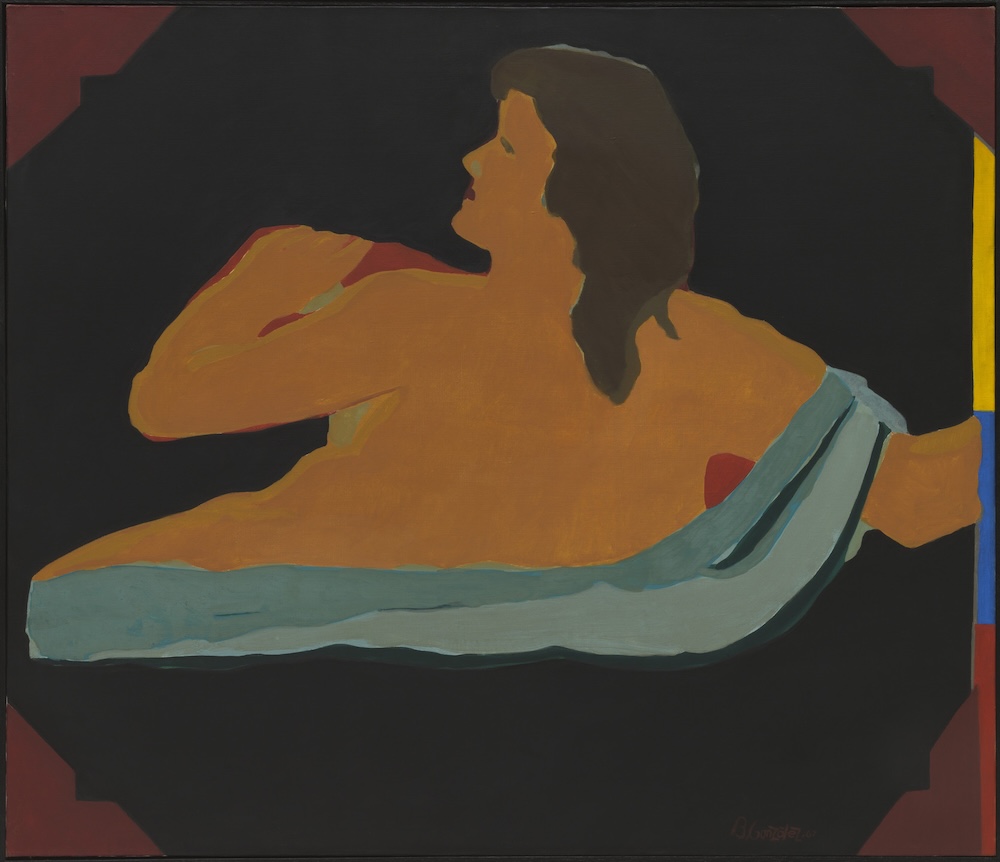
One of González’s big sources of inspiration was a series of cheap, mass-produced prints of kitsch religious and countryside scenes by a company called Gráficas Molinari. They were inspired by Old Masters, which Gonzalez started her career by copying and repurposing. She must have been attracted by the doubleness of the remove, by painting from the prints.
I loved one of these, pictured above: Rionegro, Santander, from 1967. Gonzalez’s figure is browner and brawnier than the Molinari original. She floats in black water. Her face is typically obliterated, but seems calm. Her right arm extends outside of the frame-within-a-frame, the colours of which form the Colombian flag.
Its nuanced nationalism is a fascinating counterpoint of the artist’s harsh mockery of corrupt presidents and monarchs, the murder victims, the darkness, elsewhere in the show. For a moment, we’re with her, in the black sea. Content. Colombian.
Beatriz González is at Barbican Art Gallery (London). 25 February - 10 May 2026